
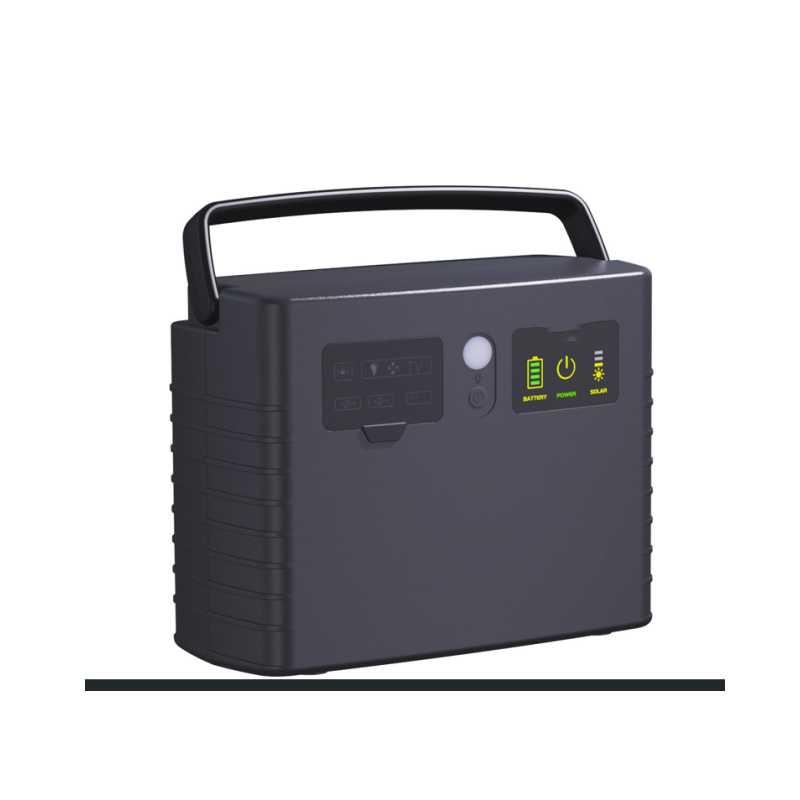
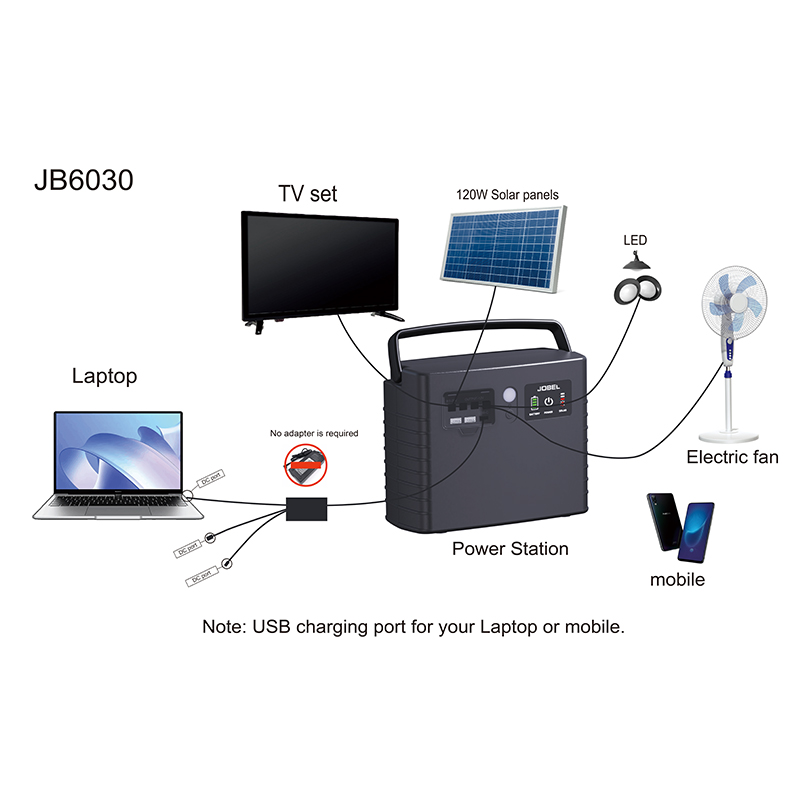
An electric fan typically consumes 30–70 watts, while a modern LED television uses 30–150 watts. Their combined load of 60–220 watts is well within the capacity of a small solar home system. For example, E-CALLING ELECTRONIC’s solar battery storage kit is an innovative off-grid power solution that integrates solar power generation, energy storage, and multi-device power supply. This blog explains the technical requirements, runtime expectations, and how complementary devices like portable solar lights help maximize efficiency.
Understanding the Power Draw of Fan and Television
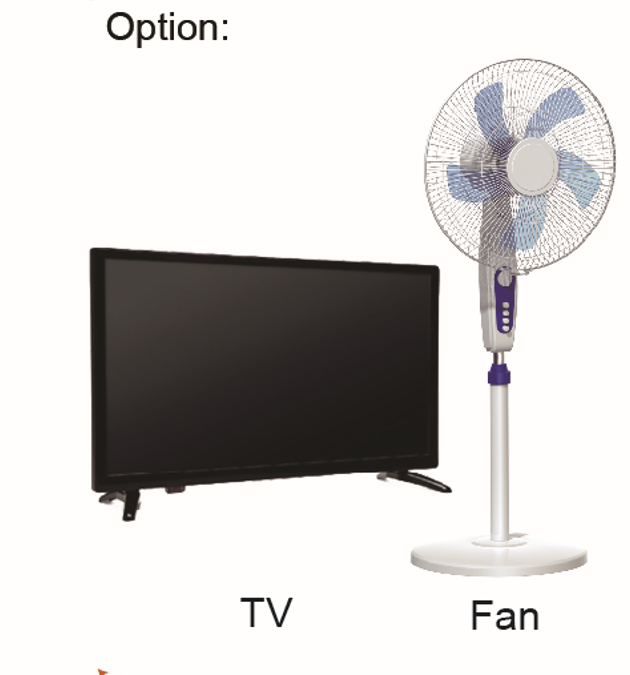
To determine if your solar home system can handle both appliances, first calculate their running wattage. A typical 12V DC fan draws 30–50 watts, while a 12V DC television uses 40–80 watts. The combined running load is only 70–130 watts—far less than a refrigerator. The solar home system’s inverter or DC output must supply this continuously. Unlike a refrigerator, neither device has a compressor surge, so even a modest 300-watt solar home system handles them with ease. This leaves plenty of capacity for portable solar lights during evening hours. For grid-unstable areas and remote villages, this makes a solar home system an ideal solution.
Battery Sizing for Overnight Fan and TV Use
While peak power is easy, the solar home system battery must store enough energy for extended use. A fan running for 8 hours consumes 240–400 watt-hours. A television watched for 5 hours adds 200–400 watt-hours. Total nightly need: 440–800 watt-hours. A solar home system with a 1,000-watt-hour lithium battery (such as E-CALLING ELECTRONIC’s home solar battery) handles this perfectly. It can provide approximately 22 hours of runtime for a TV and fan combined. The solar home system battery is the ideal solution for meeting basic electricity needs like daily lighting and small portable device charging. Lead-acid batteries require double the capacity due to 50% depth-of-discharge limits, so lithium is recommended.
Solar Panel Sizing to Recharge Daily Usage
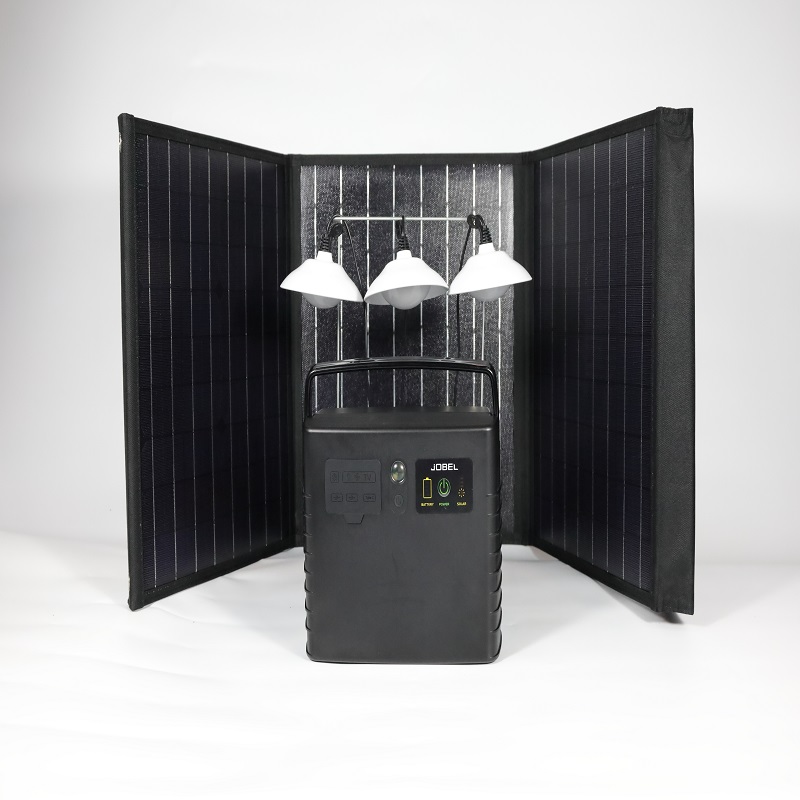
To replenish 800 watt-hours daily, your solar home system needs adequate solar input. With 5 peak sun hours, install at least 160–200 watts of panels. A 300-watt array provides a safety margin for cloudy days. This solar home system can simultaneously charge its battery while running the fan and TV during daylight. For homes using portable solar lights at night, add another 10–20 watt-hours. Besides aluminum-frame solar panels, folding solar panels are a very convenient option. A folded solar panel is compact and can easily fit in your trunk, making it easy to carry on driving trips. A portable folding panel can supplement your solar home system during travel or emergencies.
portable solar lights
portable solar lamp
solar led lighting system
portable solar lantern
Why 12V Appliances Are the Best Choice?
For maximum efficiency, run both devices directly from the solar home system’s 12V DC output instead of using an inverter. A 12V fan and a 12V television eliminate DC-to-AC conversion losses, saving 10–15% energy. This means your solar home system can power them for longer periods. Many solar home system kits include cigarette lighter ports or DC terminals. A 12V television and fan can be a good choice, and one-stop purchasing can help you save more time. When shopping, look for energy-efficient models labeled for off-grid use. Pairing them with portable solar lamp units creates a complete low-voltage home setup.
Using Portable Solar Lights to Preserve Battery Power
While your solar home system focuses on the fan and television, use dedicated solar lighting for illumination. Portable solar lights consume only 1–3 watts each, leaving more battery capacity for your main appliances. Place portable solar lights in hallways, kitchens, and bedrooms. A portable solar lamp on a desk provides 6 hours of reading light without drawing from the solar home system battery. Similarly, a portable solar lantern hung near the TV area offers ambient lighting while you watch. By offloading lighting tasks to these independent devices, your solar home system can run the fan and television for extended hours without risk of low battery.
Real-World Runtime with a Home Solar Battery
Consider a typical solar home system rated at 500 watts of panels and a 1,200-watt-hour lithium battery. Running a 50-watt fan and an 80-watt television simultaneously (130 watts total) gives a theoretical runtime of 9.2 hours (1,200 ÷ 130). However, the solar home system controller reserves some capacity. In practice, you can expect 7–8 hours of continuous operation. If you also use portable solar lights at 2 watts each for 5 hours, that adds only 10 watt-hours—negligible. The solar home system battery is built for such daily cycles. With folding solar panels for daytime recharging, you can run the fan and TV all night and still wake up to a full battery.
A Solar Home System Handles Fan and TV Easily
Thus, a solar home system can absolutely run both an electric fan and a television simultaneously. The combined load of 70–130 watts is modest, requiring only a 300+ watt inverter or direct DC connection. A home solar battery with 1,000–1,200 watt-hours provides approximately 22 hours of runtime for both devices. Use portable solar lights and a portable solar lamp for illumination without draining the main battery. A portable solar lantern adds backup lighting. A solar led lighting system handles fixed lighting independently. For those in grid-unstable areas, remote villages, or pursuing a low-carbon lifestyle, a solar home system is the ideal solution. With 12V appliances and folding solar panels for travel, you can enjoy cool breezes and evening entertainment anywhere the sun shines.
XIAMEN E-CALLING ELECTRONIC CO.,LTD(E-CALLING), established in 2009,is a high-tech manufacturer specializing in the R&D and production of solar products,home electronic product ect. We deliver reliable and trusted Electronics Manufacturing Services (EMS) as a comprehensive one-stop partner. Our integrated offering spans the entire product lifecycle- from initial PCB design,custom function,making a prototype sample,plastic mold making, rigorous testing,assembling,and end-to-end global supply chain management service.
